.png)
Commercial parking lots in New Jersey take a beating—constant vehicle traffic, heavy delivery trucks, 50+ annual freeze-thaw cycles, road salt, heavy rains, and UV exposure cause cracking, potholes, fading, and safety hazards fast. For property managers, business owners, and facility teams, regular maintenance isn't optional; it's the key to avoiding liability issues, costly emergency repairs, and lost customer access.
Implement these 10 essential tips to protect your investment and keep your lot looking professional year-round:
1. Perform Regular Inspections to Catch Issues Early
NJ winters accelerate damage—don't wait for complaints.
- Inspect monthly, with thorough checks after thaw, storms, or heavy use.
- Look for cracks, potholes, alligator patterns, raveling, fading, or standing water.
- Document with photos and note high-traffic wear areas.Early detection prevents small problems from becoming major safety or structural failures.
2. Sweep and Clean Frequently to Remove Debris
Dirt, trash, oil, and winter salt buildup trap moisture and grind down asphalt.
- Schedule power sweeping weekly or bi-weekly (more in fall/spring).
- Use blowers or vacuums for edges, curbs, and catch basins.
- Remove oil spills immediately with absorbent and degreaser.Clean surfaces improve appearance, enhance sealcoat performance, and reduce long-term wear.
3. Fill Cracks Promptly to Block Water Intrusion
Freeze-thaw is the #1 destroyer—water enters cracks, freezes, expands, and wrecks the pavement.
- Use rubberized hot-applied crack filler for cracks >1/4 inch (cold pour for smaller).
- Clean cracks thoroughly (weed removal, blowing out debris) before filling.
- Apply in dry conditions above 40°F—ideal in fall before winter hits.Sealed cracks prevent potholes and extend pavement life significantly.
4. Sealcoat Every 2–3 Years for Maximum Protection
Sealcoating shields against UV, water, chemicals, salt, and oxidation.
- Apply first sealcoat 6–12 months after new paving, then every 2–3 years (sooner for high-traffic lots).
- Choose commercial-grade asphalt emulsion with additives for durability and traction.
- Prep: Clean thoroughly, fill cracks, patch potholes first.
- Restrict access 24–48 hours post-application.This simple step can double your asphalt's lifespan in NJ's demanding climate.
5. Manage Snow and Ice Removal Carefully
Improper plowing or de-icing damages surfaces fast.
- Use rubber-edged blades or plow shoes to avoid scraping asphalt.
- Apply sand or approved non-damaging de-icers (avoid rock salt if possible).
- Clear snow promptly to prevent melt/refreeze in low spots.
- Direct plowed snow away from curbs and drainage areas.Proper removal minimizes freeze-thaw damage and maintains ADA compliance.
6. Address Drainage and Puddling Issues Immediately
Standing water from rain or melt leads to base erosion and accelerated cracking.
- Ensure positive slope for quick runoff to drains or edges.
- Clean catch basins, inlets, and pipes regularly.
- Regrade low areas or add drainage solutions if chronic puddling occurs.Good drainage is critical for longevity in NJ's wet springs and snowy winters.
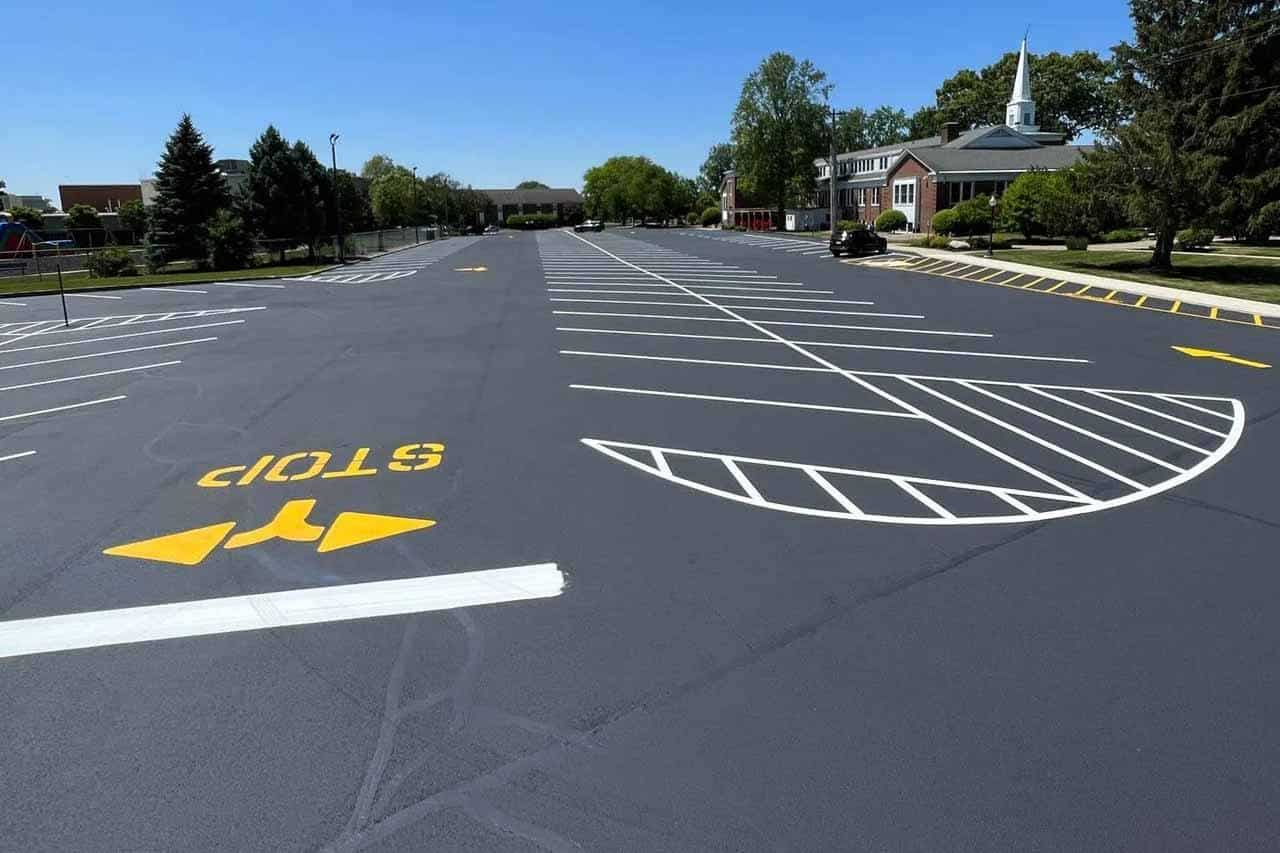
7. Refresh Line Striping Annually for Safety and Appearance
Faded or worn striping creates confusion and liability risks.
- Restripe every spring or after sealcoating (sealcoat first, then stripe).
- Use high-visibility thermoplastic or water-based paint for durability.
- Include ADA spaces, arrows, fire lanes, and crosswalks.Sharp striping enhances curb appeal and keeps your lot compliant.
8. Repair Potholes Quickly to Prevent Spread
Potholes form from water infiltration and traffic—ignore them and they grow.
- Use permanent hot-mix patching for best results (cold patch temporary only).
- Clean area, apply tack coat, compact thoroughly.
- Address in warmer months for optimal bonding.Quick fixes maintain safety and prevent vehicle damage claims.
9. Control Vegetation and Edge Intrusion
Weeds, grass, and roots lift edges and crack pavement.
- Apply pre-emergent herbicides along curbs in spring.
- Trim edges regularly and remove invasive growth.
- Seal edges if needed to block further intrusion.Prevents tripping hazards and structural weakening.
10. Partner with Professionals for Annual Assessments
DIY covers basics, but experts spot hidden issues.
- Schedule yearly inspections with a trusted contractor like Pittenger Paving & Excavating.
- Get recommendations for milling, overlays, or full rehab timing.
- Benefit from NJ-specific expertise on freeze-thaw and traffic wear.
Following these 10 tips helps New Jersey businesses maintain safe, attractive, and durable parking lots while minimizing downtime and repair costs. Proactive care turns potential headaches into long-term savings.
At Pittenger Paving & Excavating, we specialize in commercial parking lot maintenance, crack filling, sealcoating, milling, repairs, and more across New Jersey. Ready for an inspection or quote? Contact us today—we'll keep your lot in top shape through every season.
Your business deserves a reliable surface. Let's make it last.
.svg)